May
2026
US-Iran negotiations are back on
DIY Investor
6 May 2026
The latest headlines suggesting the US and Iran are closing in on a one-page memo to end the war mark a significant shift in the narrative and are likely to be taken as a clear positive by markets.
This is arguably the closest both sides have come to a resolution since the conflict began, and even without a fully detailed agreement, the mere progress toward a framework for de-escalation is enough to alter how risk is being priced.
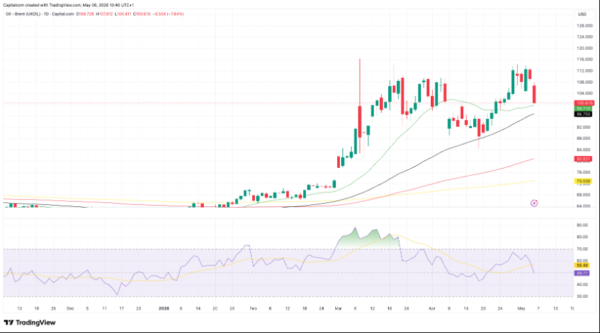
In the near term, this development should support a classic risk-on reaction. Oil prices have come under further pressure as the probability of a prolonged supply disruption declines, while bond yields have eased as inflation concerns linked to energy begin to moderate. Equities, particularly outside the US and in more cyclical sectors, will benefit from the reduced geopolitical risk premium, continuing the upside strengthened by the recent earnings season. Markets at this stage do not need a final deal as they tend to move on direction of travel, and this clearly points toward de-escalation.
However, it is important to stress that this is still a fragile step rather than a definitive resolution. A one-page memo suggests that many key details remain unresolved, and past experience has shown that negotiations can quickly stall or reverse. Internal divisions within Iran, in particular, remain a potential obstacle to a smooth agreement. As such, while this development reduces immediate tail risk, it does not eliminate uncertainty. The broader implication is that markets are likely to lean further into a “glass half full” positioning, continuing to unwind some of the worst-case scenarios that had been priced in. But this also creates asymmetry. As optimism builds, there is less room for positive surprise and greater vulnerability to disappointment. If talks were to falter again, the reversal across oil, equities and rates could be sharp.
Brent crude daily chart
Daniela Hathorn
Senior Market Analyst
capital●com
Leave a Reply
You must be logged in to post a comment.