Mar
2026
The Times They Are A-Changin’: Force is the Word
DIY Investor
3 March 2026
 “Welcome to a new kind of tension
All across the alienation
Where everything isn’t meant to be okay”
Fifteen months ago, in his election night victory speech Donald Trump promised “I’m Not Going to Start Wars, I’m Going to Stop Wars”.
Trump has also repeatedly denounced the 2003 invasion of Iraq as a mistake.
He has campaigned twice on a platform of ending US military entanglements abroad, and lobbied aggressively to be awarded the Nobel peace prize based on his claim to have ended eight wars.
Only two weeks ago, he hosted the inaugural meeting of his Board of Peace, which was supposedly going to resolve conflicts, not just in the Middle East but around the world.
That meeting brought leaders and senior officials from 27 disparate states, most of them autocracies, to Washington to praise Trump the peacemaker.
You know this is just spin when the ace bullshitter, and accomplice to the illegal Iraq debacle, Tony Blair, declared Trump’s Middle East vision “the best – indeed the only – hope for Gaza, the region and the wider world”.
One can only guess what “call me Tony” is being paid.
The Board appears to have no rules, except the one that allows Trump to make them up as he goes along. Quite what the board is, is a mystery. It doesn’t appear to be a forum for resolving conflict, more a vehicle for his political and financial interests.
More recently, the White House issued a press release declaring Donald Trump the “President of Peace.” Four days later, he announced a major combat operation in Iran, referring to it as “war.”
The opening foray of this war saw the killing of Iran’s supreme leader, Ayatollah Ali Khamenei, by a US-Israeli strike in a targeted assassination of a head of state.
His justification for the attack was stopping Iran’s attempts to become a nuclear power, is strange as he had previously claimed to have destroyed their nuclear facilities in a series of strikes last June.
‘Today’s powder keg is the Middle East, a region already burdened with smouldering wars and fragile states’
Back in the day, people used to refer to the “Balkans powder keg“, based on the early 20th-century geopolitical instability in Southeast Europe, where intense nationalism, collapsing empires (Ottoman/Austro-Hungarian), and great power rivalries created a volatile environment.
Today’s powder keg is the Middle East, a region already burdened with smouldering wars and fragile states. Whilst few will mourn the death of a tyrannical leader, or support the hardline regime in Tehran, preferring the support desire of the Iranian people for a better future, none of this confers legal justification for the US / Israeli attack.
This was unprovoked, neither are acting in self-defence against an imminent attack. As a result it falls outside the UN charter, and, with no security council approval, it is illegal. This is simply a preventative action, taken to eliminate a future risk while an enemy appeared weak. It is a war that the US and Israel have chosen to wage.
Their actions are no different to Russia’s justification of its invasion of Ukraine, I.E., claiming to head off a future threat.
This tells us several things; both countries feel they are above international law, our own interpretation of the law is flexible depending on who’s breaking it, and, we are still under the US thumb.
Domestically, Trump bypassed Congress, who’s permission is required. This just endorses his continual push towards autocracy. Talk of mid-terms might be misplaced, I wouldn’t bet on them taking place unhindered.
A Reuters/Ipsos poll found that only 27% of Americans approve of Trump’s actions, while about half – including one in four Republicans – believe Trump is too willing to use military force. This numbers will likely diminish further when the body-bags start piling-up.
‘both countries feel they are above international law’
In his interview with the Atlantic, Trump shrugged off suggestions that the economic fallout from the war could damage his party’s prospects in November’s mid-terms, saying: “We have the greatest economy we’ve ever had.“
Firstly, the US economy isn’t in great shape, and the cost-of-living crisis shows no signs of abating. As with the immediate aftermath of Russia’s illegal invasion of Ukraine, energy prices are starting to spike, with Brent crude trading around $82 per barrel, a 14-month high. The situation will only get worse after Tehran’s decision to close the strait of Hormuz, through which C.20% of the world’s oil exports pass
European gas prices rose as much as 28%, the biggest increase since August 2023. Power prices in Europe also rose on the higher gas and oil prices, with the German year-ahead baseload contract rising 3.6%, while the equivalent French price rose by 1.2%.
The question is, what now?
The likely consequences of Trump’s actions are likely to be long-lasting. Iranian retaliation has gone beyond Israel to Gulf monarchies where US forces are deployed. Escalation is no longer notional, with Tehran focused on survival – demonstrating that, despite leadership decapitation, it can fight on.
If, as it appears, the US and Israel want to limit this to an air assault, it is unlikely they will be able to force, a change of regime, something they failed to achieve in Afghanistan, Iraq and Libya.
To date, there is a total lack of clarity as to what comes next, and, if there is no clear plan, the US risks being sucked into a long-lasting conflict of the sort that Trump repeatedly vowed to avoid.
Alex Vatanka, a senior fellow and Iran specialist at the Middle East Institute in Washington, said: “If the administration has a game plan, they have yet to reveal it, frankly. He’s going to have to move in the direction of a bigger political project, which isn’t just the military part, but a deeper conversation in his administration about what sort of regime change they could bring about.
“Then it’s not going to be a campaign of four days or four weeks or even four months. It could be something much longer.”
Trump’s words imply that he expects America’s actions to be a catalyst for regime change: “For many years, you have asked for America’s help. Now you have a president who is giving you what you want. So let’s see how you respond. This is the moment for action. Do not let it pass.”
Perhaps, the most lasting consequence of Trump’s actions will be to further weaken the system of rules on which global stability has depended on post-WW2. The reaction, or, more accurately , the lack of reaction to his actions shows that preventive war is becoming normalised, as such it can be used by any state that considers itself threatened in the long term.
Of course, this begs the question about UK involvement, especially as we seem determined to cling onto a special relationship that is becoming increasingly toxic.
Predictably, Nigel Farage, the Reform leader is happy to bend over for Trump, supporting regime change in Iran, and claiming that Keir Starmer’s “pathetic” position on the war threatened Britain’s special relationship with the US.
However, Farage appears unwilling to offer Blair-type support, preferring not to commit our ground forces, and intending to deploy the RAF and Royal Navy only.
‘Pathetic is actually an accurate adjective for the PM, who continues to hedge his bets’
Pathetic is actually an accurate adjective for the PM, who continues to hedge his bets, although he has moved from his stance of refusing to grant the US permission to conduct strikes from our bases. In a, for him, moderate U-turn, he has agreed to the US using British military bases to attack Iranian missile sites.
This didn’t, however win him any points with Trump, who said he was “very disappointed” in Starmer for blocking him from using British bases to carry out strikes on Iran and that he took “far too much time” to change his mind
Starmer is simply indecisive and, in trying to please everyone, ends up pleasing no one. He has declined to endorse Trump’s attacks, whilst refusing to condemn them, This after the attorney general warned that the attacks are in breach of international law.
Starmer continue to struggle with criticising the US president, preferring to persist with the strategy of staying close to Trump. Is there a further role for Peter Mandelson?
Starmer is sticking with what he said in 2024 that the “special relationship” with the US “sits above whoever holds the particular office”.
At some point, Starmer will have to get off the fence, and question whether it would be in our best interest to change course, move closer to Europe and start standing up to the US president. A move that would win him support from many in his party and on the progressive left of politics.
Last week’s byelection showed Labour are losing the support of progressive voters, who are increasingly looking to the Greens and LibDems, both of whom have questioned the legality of US actions, and are urging the PM to stand up to Trump’s bullying tactics.
I suspect that Starmer’s actions now will matter little, as it seems inconceivable that he will survive May’s local elections.
‘I suspect that Starmer’s actions now will matter little, as it seems inconceivable that he will survive May’s local elections’
Starmer and his allies in the party simply seem incapable of reading the signs. They are so terrified of Reform that they have lost sight of the fact that class politics are still a necessity. The Greens, under Zack Polanski, understand that voter anger must be acknowledged and that people need to be given hope.
They were deaf to what voters were telling them, insisting the Greens were nowhere and that the race was solely between Labour and Reform.
Aside from continually appearing pathetic, other adjective that springs to mind for the PM are bewildered and petulant, the latter comes when he tries to act tough.
His reaction to the humiliation in the Gorton and Denton byelection typifies this petulance.
He wasn’t able to bring himself to congratulate Hannah Spencer, and failed to acknowledge that her focus on inequality and everyday struggles, which she constantly emphasised throughout the campaign were at the top of his government’s priorities. There was no contrition, no signs that he was determined to learn from the defeat and win back these lost voters.
Instead, he sent a letter to Labour parliamentarians full of was self-righteous arrogance and delusions, writing that Spencer was “more interested in dividing people than uniting them”. This was a refence to the Greens deliberately targeting Muslim voters, or, as Starmer saw it, engaging in “divisive, sectarian politics”, allegations frighteningly similar to those made by Nigel Farage and his allies.
Clearly, Starmer still has supporters, with a government sources quoted in the weekends Times suggesting that sticking with the government’s Faragelite immigration policy – cited as a factor in the Gorton and Denton result – might entail “deliberately sacrificing some bourgeois support.”
And, less that 24-hours later, the home secretary, Shabana Mahmood, ripped up the government’s asylum rules, implementing a change meaning that every refugee will be told that their status is temporary, lasting only 30 months.
Furthermore, Mahmood said that claimants whose countries are deemed to be safe by the UK government will from now on be expected to return.
The changes include plans to double to 10-years the amount of time some foreign nationals must wait before they can settle in the UK.
‘Mahmood said that claimants whose countries are deemed to be safe by the UK government will from now on be expected to return’
In an interview with the Guardian, Mahmood called for Labour MPs to get behind immigration reforms or risk a Nigel Farage-led government deporting refugees “to certain death”.
She has insisted that far from being unpopular with traditional Labour voters, her policies recognise the concerns of people who feel resentment because “public services are under pressure”.
Clearly Mahmood had shared her thoughts with the housing, communities and local government secretary, Steve Reed, who has been accused by a Labour council of showing “arrogance, indifference and moral bankruptcy” towards children in social care.
The Labour leaders of Hartlepool council said they were “furious and appalled” by Reed, when, last week, a cross-party delegation, asked him for £3m to help alleviate the growing cost of social care.
The town in County Durham is one of the most deprived in England, with the third highest number of children in care per capita in the country.
Pamela Hargreaves, the Labour leader of Hartlepool council, told the Guardian that Reed said the government would not “reward councils for having high numbers of children in care” and then “dismissed” the discussion by saying: “That’s life.”
And that Steve, Shabana, Kier, et al, is your career. Hard luck, eh, so long, don’t rush back!
“Try to cry out in the heat of the moment
Possessed by a fury that burns from inside”
@coldwarsteve
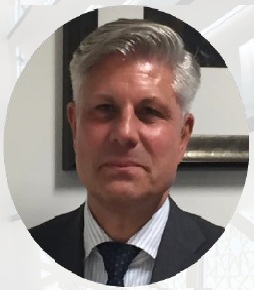 Philip Gilbert is a city-based corporate financier, and former investment banker.
Philip is a great believer in meritocracy, and in the belief that if you want something enough you can make it happen. These beliefs were formed in his formative years, of the late 1970s and 80s
Click on the link to see all Brexit Bulletins:

Leave a Reply
You must be logged in to post a comment.