May
2026
12.2 million people, are on track for a less than minimum retirement lifestyle
DIY Investor
13 May 2026
With global markets having experienced notable volatility of late – looking at the nation’s preparedness for retirement with a steady hand in a shifting landscape is key – by Chira Barua
As we publish the first part of our 2026 Retirement Report research, we eagerly await the findings of the Pension Commission, a moment that feels like a real turning point in how we all think about long-term savings in the UK. On top of this, AI is starting to change the game, allowing us to move to more personalised support.
This backdrop of potential reform, alongside the adoption of technology makes the insights in this year’s report more relevant than ever before.
Taken together, this makes 2026 a seminal year for pensions. We’re publishing our report in two parts this year. Part one focuses on financial pressures, vulnerability and health, while Part two will delve deeper into AI and decumulation.
It’s not just about the numbers, it’s how we all approach financial security throughout our lives and into retirement.
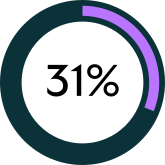
Our latest National Retirement Forecast shows that 31% of UK adults are currently at risk of failing to cover their basic needs in retirement – a significant improvement from 39% last year. However, this positive turn should be viewed in context.
Around half of the improvement reflects changes to the benchmark for a “minimum” lifestyle, partly driven by falling energy costs over the last year. That underlines how exposed people on lower retirement incomes are to external factors beyond their control, particularly energy prices. The other half reflects a modest improvement among those with no pension arrangements, including slightly higher pay, non-pension savings and projected home ownership. So most definitely a move in the right direction, but the reality for many remains precarious, with median projected household retirement incomes rising by only £200, from £25.7k to £25.9k a year.
The risk of pension poverty isn’t shared equally and deep inequalities persist in people’s retirement savings journeys. We are seeing a stark gap for ethnic minority groups, the self-employed and those facing vulnerable circumstances.
Most concerning is the impact of health on financial security. For those whose physical or mental health affects their day-to-day life, one in two are projected to face pension poverty. Poor health doesn’t just make daily life harder, it disrupts earnings and makes it nearly impossible to save consistently. When financial shocks hit later in a working life, people often find it much harder to recover.
‘It’s not just about the numbers, it’s how we all approach financial security throughout our lives and into retirement.”
This is why it is so important that we put people’s savings journeys at their fingertips and engage with them as individuals, each with a unique set of personal experiences and challenges.
I am very proud that our Scottish Widows app is setting the pace in the industry for digital engagement. By integrating smarter tools and AI-driven personalisation, we are making pensions feel relevant, not just distant. Our tools and gamified experiences were used more than 770,000 times in the last 15 months, with one in two taking direct action.
That momentum – small actions taken today and in the future – is what will help reshape retirement outcomes in the years to come.
This same motivation lies behind the introduction of Targeted Support, another landmark moment for our industry. It is a unique opportunity to close the advice gap and offer real help to those managing competing financial pressures.
Analysis
A comfortable retirement shouldn’t be reserved for a few. Whether it’s through smarter digital tools or advocating for policy changes that protect the most vulnerable, our goal remains the same – helping everyone feel more confident about their financial future.
Leave a Reply
You must be logged in to post a comment.